Zara’s 2026 Supply Chain Optimisation: Reducing Production Cycles by 10 Days

Advertisements
Global fashion leader Zara is accelerating its operations with a supply chain optimisation designed to shorten production cycles by 10 days.
Industry analysts are closely monitoring the rollout, as this push for increased agility sets a new operational benchmark for fast fashion and global retail logistics.
Advertisements
Understanding Zara’s Ambitious 2026 Goals
Zara’s strategic push towards its 2026 supply chain optimisation is not merely an incremental adjustment; it represents a fundamental recalibration of its operational backbone.
The goal to reduce production cycles by 10 days is a bold statement in an industry defined by speed.
This initiative is designed to bolster Zara’s competitive edge, allowing the brand to respond even more rapidly to emerging fashion trends.
It also aims to minimise inventory risks and enhance overall profitability in a volatile market environment.
The company has consistently leveraged its supply chain as a core differentiator, and this latest endeavour seeks to elevate that advantage further.
It demonstrates a proactive approach to future-proofing its business model against potential disruptions.
The Strategic Imperative for Speed
In the fast-paced world of fashion, speed-to-market is paramount. Zara’s 2026 supply chain optimisation directly addresses this, ensuring new designs reach stores and online platforms quicker than competitors.
This accelerated cycle enhances Zara’s ability to capture fleeting trends, reducing the time from design concept to consumer purchase. The initiative is expected to yield significant benefits in terms of sales velocity and reduced markdowns.
The competitive landscape demands constant innovation, and Zara’s focus on reducing production cycles by 10 days is a clear indicator of its commitment to staying ahead. This strategic imperative is central to its long-term growth.
- Enhanced responsiveness to consumer trends.
- Significant reduction in lead times for new collections.
- Improved inventory management and reduced waste.
- Strengthened competitive position in fast fashion.
Technological Innovations Driving the Optimisation
The success of Zara’s 2026 supply chain optimisation hinges significantly on the integration of advanced technologies.
These innovations are crucial for achieving the ambitious target of reducing production cycles by 10 days, streamlining operations from end to end.
Investments in data analytics, artificial intelligence, and automation are reportedly at the forefront of this transformation.
These tools provide unprecedented visibility and control over every stage of the supply chain, enabling quicker decision-making.
The adoption of such technologies is not only about efficiency but also about creating a more agile and resilient supply network.
This technological backbone is essential for managing the complexities of global fashion production.
Leveraging Data Analytics and AI
Data analytics and AI are playing a transformative role in Zara’s efforts to achieve its 2026 supply chain optimisation goals.
These technologies allow for predictive insights into consumer demand, material procurement, and logistical flows.
By analysing vast datasets, Zara can anticipate trends, optimise inventory levels, and identify potential bottlenecks before they impact production.
This proactive approach is key to shaving valuable days off the production cycle.
The intelligent use of data ensures that resources are allocated efficiently, from factory floor to retail shelf, directly contributing to the objective of reducing production cycles by 10 days.
This is a crucial element for Zara’s 2026 supply chain optimisation.
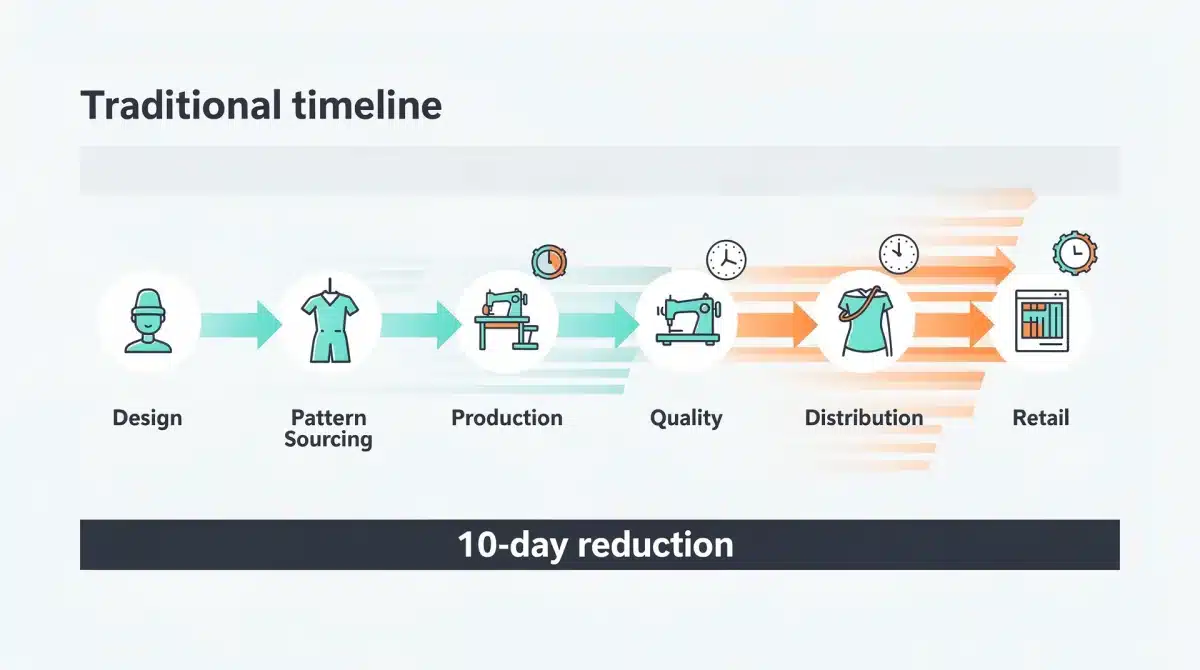
Impact on Manufacturing and Logistics
The announced reduction in production cycles by 10 days under Zara’s 2026 supply chain optimisation will have profound implications for its manufacturing and logistics operations.
This target necessitates a complete overhaul of existing processes, from factory floor scheduling to transportation networks.
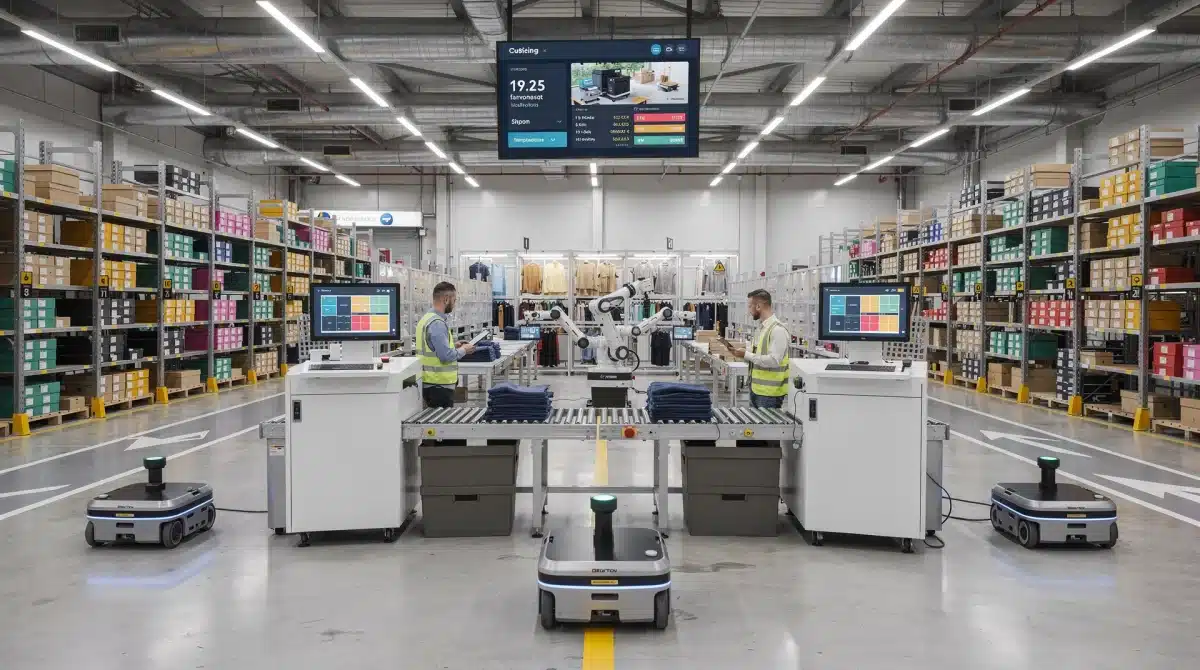
Manufacturing facilities are expected to adopt more flexible and automated systems to accelerate production without compromising quality.
This shift requires closer collaboration with suppliers and a re-evaluation of current production methodologies.
Logistics, meanwhile, will see increased reliance on expedited shipping methods and optimised routing algorithms.
The aim is to move products from production sites to distribution centres and stores with unprecedented speed and precision, a cornerstone of Zara’s 2026 supply chain optimisation.
Optimising Production Footprint
Zara’s manufacturing footprint is undergoing significant optimisation to support the goal of reducing production cycles by 10 days.
This includes a focus on nearshoring and insourcing capabilities where strategically advantageous, allowing for tighter control and faster turnaround times.
The company is investing in advanced manufacturing technologies that can adapt quickly to changing design specifications and production volumes.
This flexibility is critical for maintaining responsiveness while scaling operations efficiently.
The emphasis is on creating a production ecosystem that can react instantaneously to market signals, a core tenet of Zara’s 2026 supply chain optimisation. This ensures that the entire value chain is geared towards speed and efficiency.
- Streamlined manufacturing processes for quicker output.
- Enhanced collaboration with key suppliers for material flow.
- Increased adoption of automation in production.
- Strategic geographic placement of manufacturing hubs.
Challenges and Potential Roadblocks
While Zara’s 2026 supply chain optimisation promises significant advantages, the journey to reducing production cycles by 10 days is not without its challenges.
Implementing such a large-scale transformation involves navigating complex operational, technological, and human resource hurdles.
Integrating new technologies across a vast global network requires substantial investment and meticulous planning. Ensuring seamless compatibility between legacy systems and modern solutions presents a considerable technical challenge.
Moreover, adapting human capital to new processes and technologies demands comprehensive training and change management strategies.
Overcoming these potential roadblocks will be critical for the successful execution of Zara’s 2026 supply chain optimisation.
Navigating Global Supply Chain Volatility
The current global environment, characterised by geopolitical tensions, economic fluctuations, and unforeseen disruptions, adds another layer of complexity to Zara’s 2026 supply chain optimisation.
Supply chain volatility can directly impact the ability to consistently reduce production cycles by 10 days.
Managing raw material sourcing, international logistics, and labour availability amidst these uncertainties requires robust risk management strategies.
Zara must build resilience into its optimised supply chain to mitigate external pressures effectively.
The ability to adapt quickly to unexpected events will be a key determinant of success for Zara’s 2026 supply chain optimisation. This adaptability ensures that the pursuit of speed does not compromise stability or ethical standards.
Competitive Landscape and Industry Implications
Zara’s 2026 supply chain optimisation, with its bold aim of reducing production cycles by 10 days, is set to send ripples across the entire fashion industry.
Competitors, particularly in the fast-fashion segment, will be closely observing the outcomes and potentially feeling pressure to accelerate their own operations.
This move could redefine industry benchmarks for speed, efficiency, and responsiveness, forcing other brands to re-evaluate their supply chain strategies.
The competitive landscape is likely to intensify as companies strive to match or exceed Zara’s new operational tempo.
The implications extend beyond direct competitors, influencing suppliers, logistics providers, and even technology developers catering to the fashion sector. Zara’s 2026 supply chain optimisation is a significant development for the global fashion ecosystem.
Setting New Standards for Fast Fashion
By aiming to reduce production cycles by 10 days, Zara is not just optimising its own operations; it is actively setting new standards for the fast-fashion paradigm.
This ambitious target demonstrates a commitment to pushing the boundaries of what is considered achievable in terms of speed and agility.
The success of Zara’s 2026 supply chain optimisation could solidify its position as an undisputed leader in rapid market response.
This will likely pressure rivals to invest more heavily in their own supply chain efficiencies to avoid falling behind.
Ultimately, this initiative could drive broader industry innovation, fostering a more dynamic and responsive global fashion landscape.
The entire sector will be watching how Zara’s 2026 supply chain optimisation unfolds.
Sustainability and Ethical Considerations
As Zara pursues its 2026 supply chain optimisation to reduce production cycles by 10 days, the focus on sustainability and ethical practices remains a critical consideration.
The drive for speed must be balanced with responsible sourcing and manufacturing processes.
The company has publicly committed to various sustainability targets, and these must be integrated into the new, accelerated supply chain model.
Ensuring transparency and accountability across the entire value chain is paramount.
Stakeholders, including consumers and advocacy groups, are increasingly scrutinising the environmental and social impact of fast fashion.
Zara’s 2026 supply chain optimisation must demonstrate how increased speed can coexist with enhanced sustainability efforts.
Integrating Sustainable Practices
Integrating sustainable practices into an accelerated supply chain is a complex but necessary undertaking for Zara’s 2026 supply chain optimisation.
This includes optimising material usage, reducing waste, and minimising the carbon footprint associated with faster logistics.
The challenge lies in achieving the 10-day reduction in production cycles without increasing the environmental burden.
This requires innovative solutions in material science, manufacturing processes, and transportation efficiency.
Zara’s commitment to sustainability will be tested as it implements its 2026 supply chain optimisation. Successful integration of these practices will enhance its brand reputation and meet evolving consumer expectations.
Future Outlook and Long-Term Vision
Zara’s 2026 supply chain optimisation is more than just a short-term goal; it represents a significant component of the company’s long-term vision for market leadership.
The reduction of production cycles by 10 days is a foundational step towards a more adaptive and resilient future.
The insights gained from this optimisation will likely inform subsequent strategic initiatives, enabling Zara to continuously refine its operational model.
This forward-looking approach positions the brand to navigate future industry shifts effectively.
Ultimately, this initiative aims to ensure Zara remains at the forefront of fashion retail, capable of delivering unparalleled speed and value to its global customer base for years to come.
Zara’s 2026 supply chain optimisation is a testament to this vision.
Beyond 2026: Continuous Evolution
The completion of Zara’s 2026 supply chain optimisation will not mark the end of its transformational journey but rather a new beginning. The nature of fast fashion demands continuous evolution and adaptation.
The lessons learned from reducing production cycles by 10 days will provide a blueprint for future enhancements, fostering a culture of perpetual improvement. Zara’s long-term vision is one of dynamic adaptation and sustained innovation.
This ongoing commitment to operational excellence will be crucial for maintaining its competitive edge and responding to the ever-changing demands of the global fashion market.
Zara’s 2026 supply chain optimisation is a stepping stone to an even more agile future.
| Key Point | Brief Description |
|---|---|
| Cycle Reduction | Zara aims to reduce production cycles by 10 days by 2026. |
| Tech Integration | Advanced AI, data analytics, and automation are key drivers. |
| Market Impact | Expected to set new industry benchmarks for fast fashion. |
| Sustainability Focus | Balancing speed with ethical sourcing and environmental responsibility. |
Frequently Asked Questions About Zara’s Supply Chain Optimisation
The main objective is to reduce production cycles by 10 days by 2026. This will enhance speed-to-market, allowing Zara to respond more quickly to fashion trends and improve overall operational efficiency across its global network.
Key technologies include advanced data analytics, artificial intelligence (AI), and automation. These tools are crucial for gaining predictive insights, streamlining logistics, and optimising manufacturing processes to achieve the ambitious cycle reduction.
Manufacturing will become more agile and automated, with a focus on flexible production systems and closer supplier collaboration. This aims to accelerate output without compromising quality, directly supporting the 10-day reduction target.
Challenges include significant investment in new technologies, integrating diverse systems, and managing human capital adaptation. Navigating global supply chain volatility and maintaining sustainability standards also present considerable hurdles.
This initiative is expected to set new benchmarks for speed and efficiency in the fast-fashion industry. It could pressure competitors to accelerate their own supply chains, driving innovation and intensifying the competitive landscape across the retail sector.
Looking Ahead
Zara’s 2026 supply chain optimisation represents a significant strategic move, reinforcing its commitment to innovation and market leadership.
The successful reduction of production cycles by 10 days will undoubtedly solidify its position in the fast-fashion arena and serve as a blueprint for future operational enhancements, as detailed in recent industry examinations like the Zara supply chain analysis.
Industry observers will be closely monitoring the implementation, particularly how Zara balances speed with its stated sustainability goals.
The outcomes of this ambitious project could redefine industry standards and influence future supply chain strategies across the global retail landscape.